
AI‑Powered Cyberattacks Are Outpacing Business Defenses | Profulgent

AI‑Powered Cyberattacks Are Outpacing Business Defenses Artificial intelligence has permanently changed the cyber threat landscape. Today’s attackers are leveraging AI to move faster, adapt in real time, and bypass defenses that were considered effective just a few years ago. For small and mid‑sized businesses, this shift has created a dangerous gap between how attacks occur and how security is deployed. AI‑powered cyberattacks are no longer theoretical. They are actively being used to automate phishing, evade endpoint protection, and accelerate ransomware campaigns—often without triggering traditional alerts. Organizations that rely on legacy security tools alone are increasingly exposed. How AI Is Changing the Cyberattack Landscape AI allows attackers to scale and refine their tactics with unprecedented speed. Instead of manually probing defenses, threat actors now use machine learning to identify weaknesses, adjust payloads, and mimic legitimate user behavior. Common examples include: Phishing campaigns that adapt messaging based on user responses Malware that changes its behavior to avoid signature‑based detection Credential attacks that analyze login patterns to evade conditional access controls These attacks are faster, quieter, and far more difficult to detect using conventional tools. Why Traditional Security Tools Can’t Keep Up Firewalls, antivirus software, and periodic scans were designed for a slower threat environment. AI‑driven attacks exploit that limitation by operating between monitoring intervals and disguising malicious activity as normal behavior. Key gaps include: Alert fatigue caused by excessive false positives Lack of behavioral analysis across users and devices Limited visibility into lateral movement after initial compromise Without continuous monitoring and correlation across systems, modern attacks frequently go unnoticed until damage has already occurred. The Real‑World Impact on Small & Mid‑Sized Businesses While large enterprises often dominate cybersecurity headlines, small and mid‑sized organizations are frequently targeted because their defenses are easier to bypass. The most common outcomes include: Business disruption caused by ransomware or system lockouts Data exposure involving client, financial, or regulated information Emergency recovery costs that exceed planned IT budgets In many cases, organizations discover weaknesses only after an incident forces an unplanned response. What Modern Cyber Defense Requires Today Defending against AI‑powered threats requires a shift from reactive security to continuous, intelligence‑driven protection. Effective modern defense strategies typically include: Continuous monitoring through managed detection and response (MDR) Behavioral analytics that identify abnormal activity early Documented incident response plans tested before an event occurs Security controls aligned to real business risk—not just compliance checklists The goal is early detection, rapid containment, and minimal business impact. How Profulgent Helps Reduce AI‑Driven Cyber Risk Profulgent works with organizations to modernize their security posture without overwhelming internal teams. Our approach focuses on visibility, preparedness, and alignment between technology and business objectives. We help clients: Identify security gaps before attackers do Implement monitoring designed for evolving threats Improve response readiness through practical, tested playbooks The result is a security program that evolves as fast as today’s threat landscape—without unnecessary complexity. Concerned About AI‑Driven Cyber Threats? If you’re unsure whether your current defenses can withstand modern attacks, we can help you assess risk and prioritize the right next steps. Schedule a Security Alignment Discussion
Anthropic’s New AI Is a Wake‑Up Call—But Small Business Cybersecurity Habits Are Missing the Real Lesson
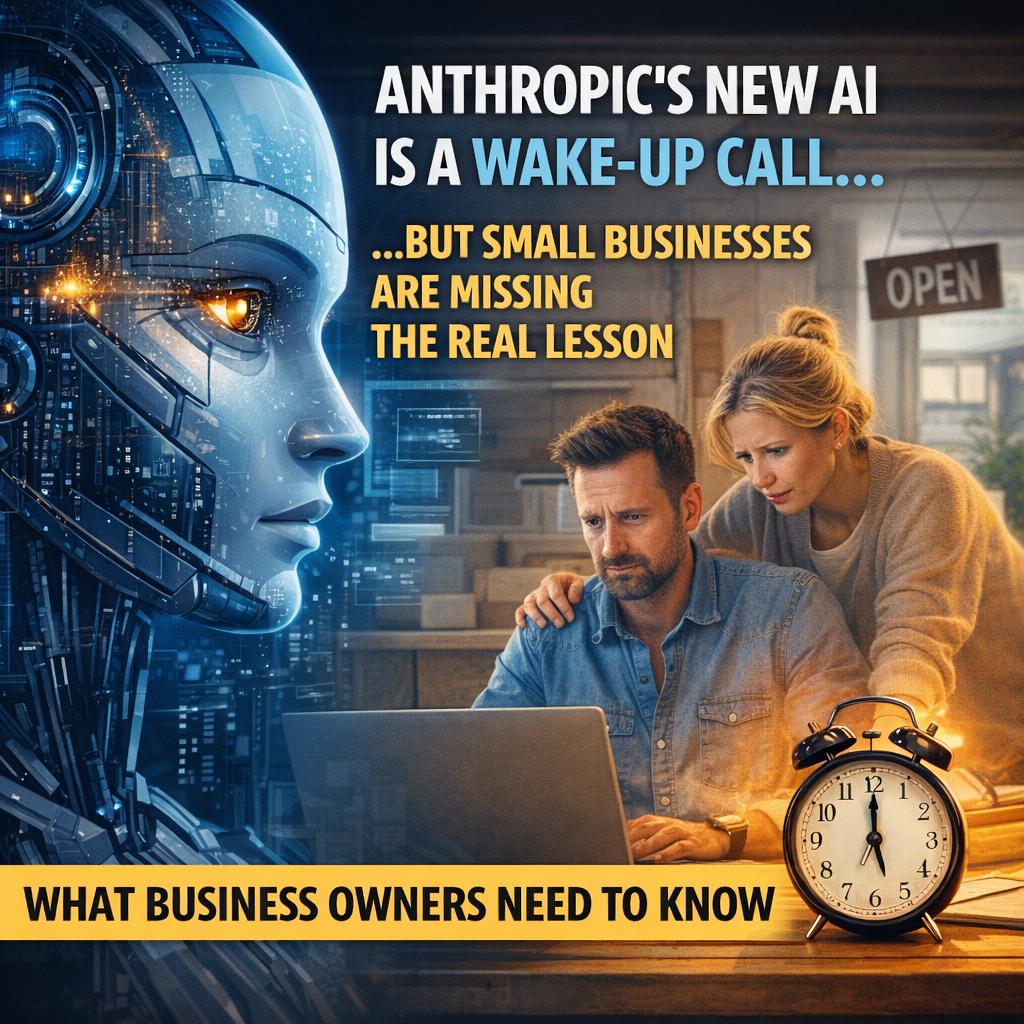
Artificial intelligence is advancing fast, and lately the headlines have taken a darker turn. For small business cybersecurity habits, this shift matters more than many owners realize. Some AI tools are now capable of identifying software vulnerabilities and helping security teams—or attackers—move faster than ever before. A recent article from Wired discusses Anthropic’s new AI model, Claude Mythos, and how it’s being framed as a potential “cybersecurity reckoning.” According to Wired, the model is powerful enough to analyze code, uncover weaknesses, and help chain together exploits at a scale humans never could—but its arrival doesn’t mean hackers suddenly gained magic powers. Instead, it exposes a problem that’s been there all along: insecure systems and slow response habits. [technewstube.com] And that’s the part small businesses should be paying attention to. The Real Risk Isn’t New AI—It’s Old Assumptions Many small businesses hear stories like this and think: Unfortunately, that thinking is exactly what puts smaller organizations at risk. What tools like Mythos reveal is that attackers don’t need custom tactics for every business anymore. They exploit common weaknesses: Those conditions are far more common in small businesses than large enterprises. Why This Matters More for Small Businesses Than Big Ones Large companies expect breaches. They have: Small businesses usually don’t. When vulnerabilities are discovered faster—whether by people or AI—the window to fix them shrinks. Businesses that patch monthly, rely on manual updates, or “get to it when they can” are the ones most exposed. AI didn’t create this problem.It just made it visible. What Business Owners Should Focus On: Small Business Cybersecurity Habits This isn’t about AI replacing hackers—it’s about forcing organizations to confront decades of security shortcuts. [technewstube.com] From a small‑business perspective, the biggest takeaways are practical: You don’t need cutting‑edge AI defenses—but you do need consistency. Practical Steps That Actually Reduce Risk Without getting technical, here’s what matters most right now: These steps stop the vast majority of real‑world attacks—AI or not. The Bottom Line AI headlines can make cybersecurity feel abstract or overwhelming. But the lesson from Anthropic’s Mythos—and Wired’s coverage—is actually simple: The businesses that struggle aren’t the ones without powerful tools.They’re the ones relying on outdated habits. Small businesses don’t need to panic.They need to be intentional. And that’s exactly where thoughtful IT guidance makes the difference. You don’t need more tools—you need better habits.A focused IT review can show where small changes reduce real risk. Most small businesses don’t fail at cybersecurity because of sophisticated attacks—they fail because small issues linger too long. Outdated systems, unclear ownership, and delayed fixes quietly increase risk over time. A short, focused IT review can identify where old habits are creating unnecessary exposure—and show which practical changes will have the biggest impact first. That kind of clarity helps business owners move forward with confidence instead of reacting after something breaks.